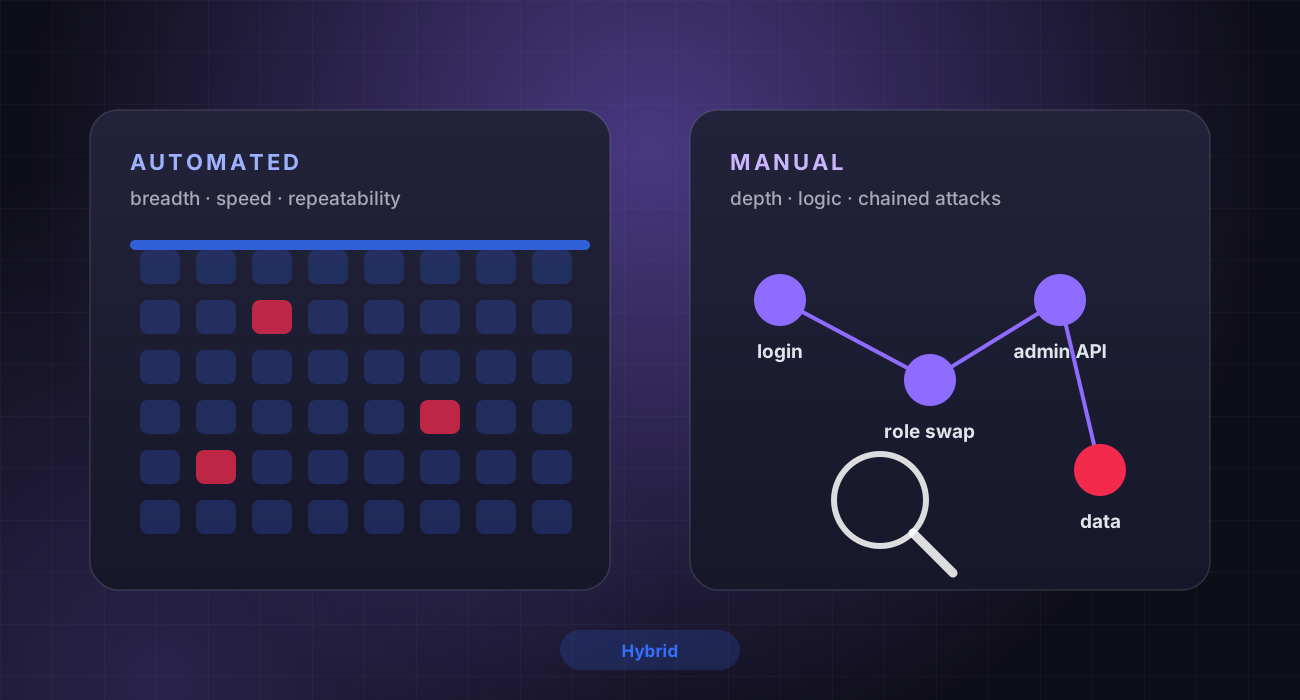
- Automated scanning gives breadth, speed and repeatability.
- Manual testing gives depth: logic, chained attacks and access control.
- Most teams need both, applied per asset and per release.
The question is rarely “automated or manual?”. It is which mix gives you the coverage you need, at the pace you ship, for a cost that makes sense.
Here is where each approach is strongest, where each falls short, and how to combine them.
Where automation wins
Scanners check thousands of known issues quickly and consistently: outdated components, missing security headers, TLS weaknesses, common injection patterns and misconfigurations. They are ideal for continuous coverage between releases and for large estates.
Where people win
Experienced testers find what requires understanding: broken access control, business logic abuse, multi-step attack chains and flaws in authentication flows. They also confirm findings, removing false positives before they reach your team.
 PentestX in practiceFIND-0214 · /api/orders
Every fix in PentestX triggers a scoped retest, so “resolved” always means verified, with evidence attached. See how retesting works →
It depends on the asset
Websites, web applications and networks benefit from both: automated scanning for breadth, manual testing for depth. APIs, mobile apps, cloud accounts, thick clients and custom assets need an analyst to set up and test properly, so they are best served by manual assessments.
Combine them over time
A common pattern is continuous or scheduled scanning on supported assets, a manual pentest before major launches and at least annually, and retests after every fix. Findings from both should land in one place with one risk model.
Breadth and depth, one workflow
Use automation for breadth, people for depth, and keep the results together so priorities are clear.
PentestX offers automated, manual and hybrid testing for websites, web apps and networks, and analyst-led pentests for every other asset type, all in one dashboard.