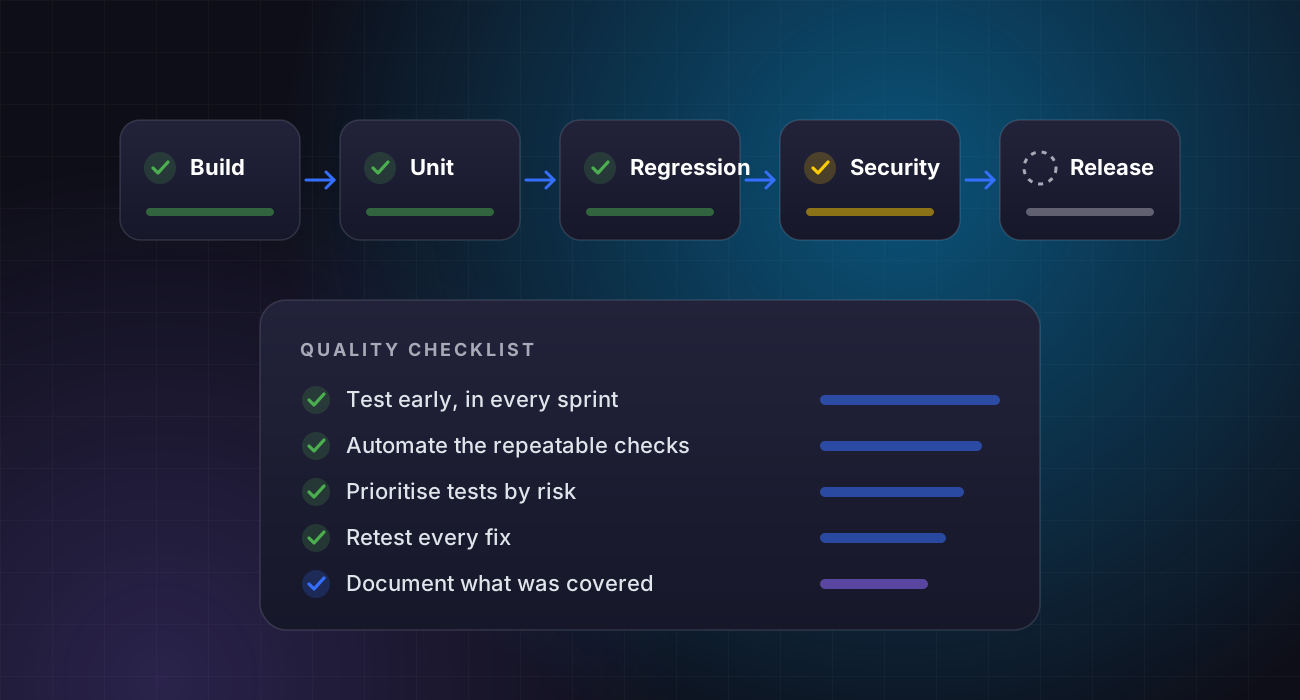
- Test early and continuously: bugs get more expensive with every stage they survive.
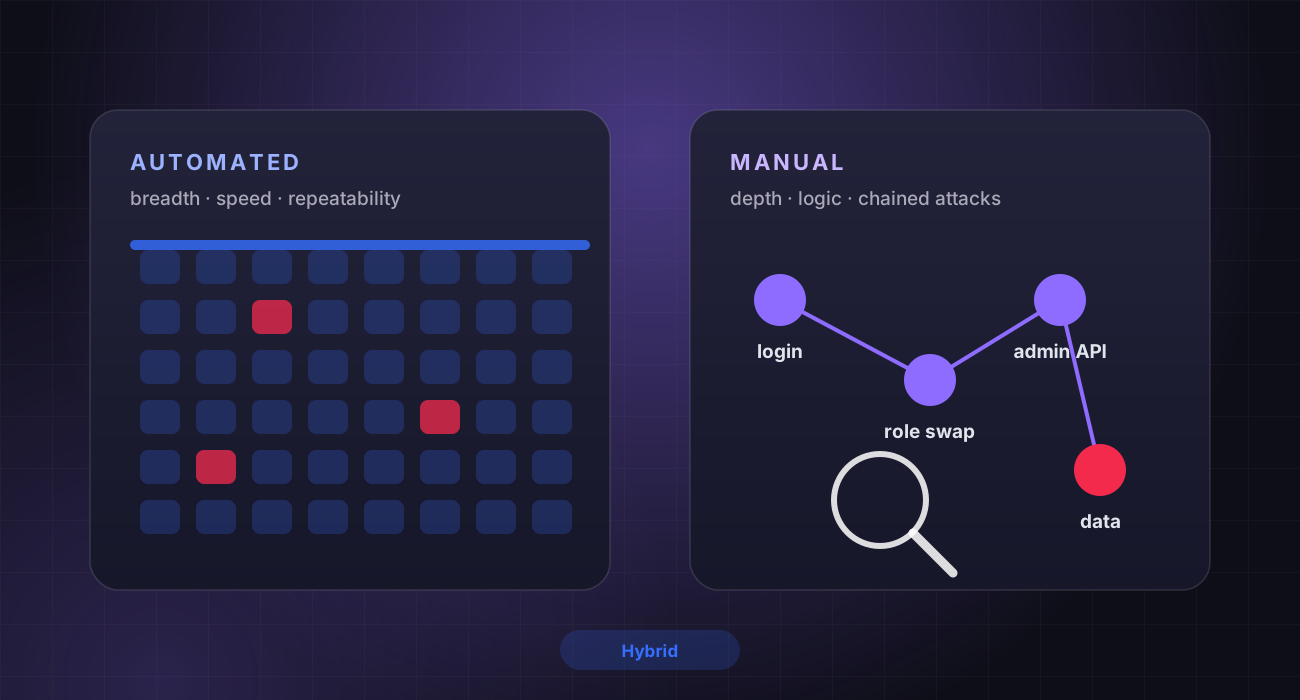
- Automate the repeatable; spend human time on risk.
- Retest every fix and document everything: that’s what makes quality provable.
In today’s fast-paced development landscape, quality is paramount. Shipping software that is robust, secure and bug-free avoids the setbacks that follow: performance issues, security vulnerabilities, a poor user experience.
Here are the ten practices that consistently deliver results, whether you’re a large enterprise or a nimble startup.
Start testing early
Integrate testing into the earliest stages of the software development lifecycle. This shift-left approach catches defects while they are still cheap to fix.
Define clear requirements
Testers can only verify what has been specified. Agree on acceptance criteria, security requirements and edge cases before code is written, and keep them visible to the whole team.
Automate where possible
Automation speeds up repetitive tests such as regression testing while increasing accuracy. Invest in a good tool and automate the functions that don’t change often.
Test on real devices and environments
Simulators are useful, but real devices and environments give more reliable results, especially for mobile, where devices, screen sizes and OS versions all change behaviour.
Implement continuous integration and testing
Build automated tests into your CI/CD pipeline so testing happens on every change, and new code can’t quietly introduce new bugs.
Prioritise test cases by risk
Not every feature carries the same weight. Focus on the areas that would hurt users most if they failed: payments, authentication, data access.
Maintain a test case repository
Keep every test case in one maintained repository, so it’s easy to reference later and reuse when similar features come along.
Run regular regression testing
Whenever features or changes ship, run regression tests to make sure existing functionality still works. Automated suites take most of the load.
 PentestX in practiceFIND-0214 · /api/orders
Every fix in PentestX triggers a scoped retest, so “resolved” always means verified, with evidence attached. See how retesting works →
Encourage collaboration between teams
Involve every stakeholder. Developers, testers and product managers working together reach better coverage and surface edge cases any one group would miss.
Document everything
Test plans, test cases, bug reports: clear documentation shows what was covered, what wasn’t, and what to improve next.
Conclusion
These practices improve software quality, reduce bugs and smooth out your release cycle. Start early, automate where possible, and keep communication clear between everyone involved.
Testing isn’t a phase: it’s an ongoing process that runs through the whole lifecycle. Build these habits into your workflow and ship software that’s more reliable, secure and efficient.