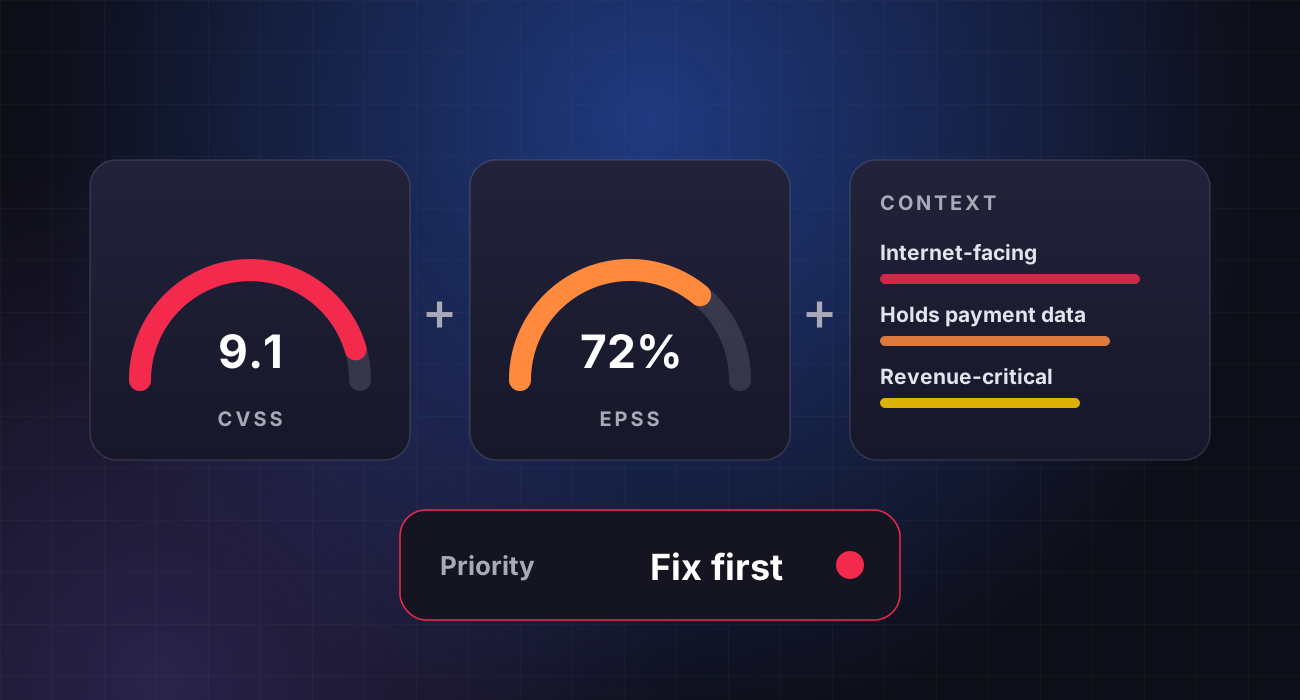
- CVSS measures how severe a vulnerability is; EPSS estimates how likely it is to be exploited.
- Neither knows your business, so add context about the asset and data at risk.
- Prioritise by the combination, and fix what is both likely and damaging first.
A pentest report can list dozens of findings, each with a severity. Treating every “high” the same way wastes engineering time and can leave the risky ones open longest.
This guide explains the scores you will see in a modern report and how to turn them into a fix order you can defend.
CVSS: how bad could it be?
The Common Vulnerability Scoring System rates technical severity from 0 to 10 based on how the flaw is exploited and what it affects: confidentiality, integrity and availability. It is consistent and widely understood, but it describes the vulnerability in general, not your environment.
EPSS: how likely is exploitation?
The Exploit Prediction Scoring System, maintained by FIRST, estimates the probability that a known CVE will be exploited in the wild in the next 30 days. It helps separate the many theoretically severe CVEs from the smaller set attackers actually use.
Context: how much does it matter to you?
Add what only you know: is the asset internet-facing, what data does it hold, how critical is it to revenue or operations, and are there compensating controls? Custom findings such as business logic flaws have no CVE or EPSS score at all, so context does most of the work there.
 PentestX in practiceFIND-0214 · /api/orders
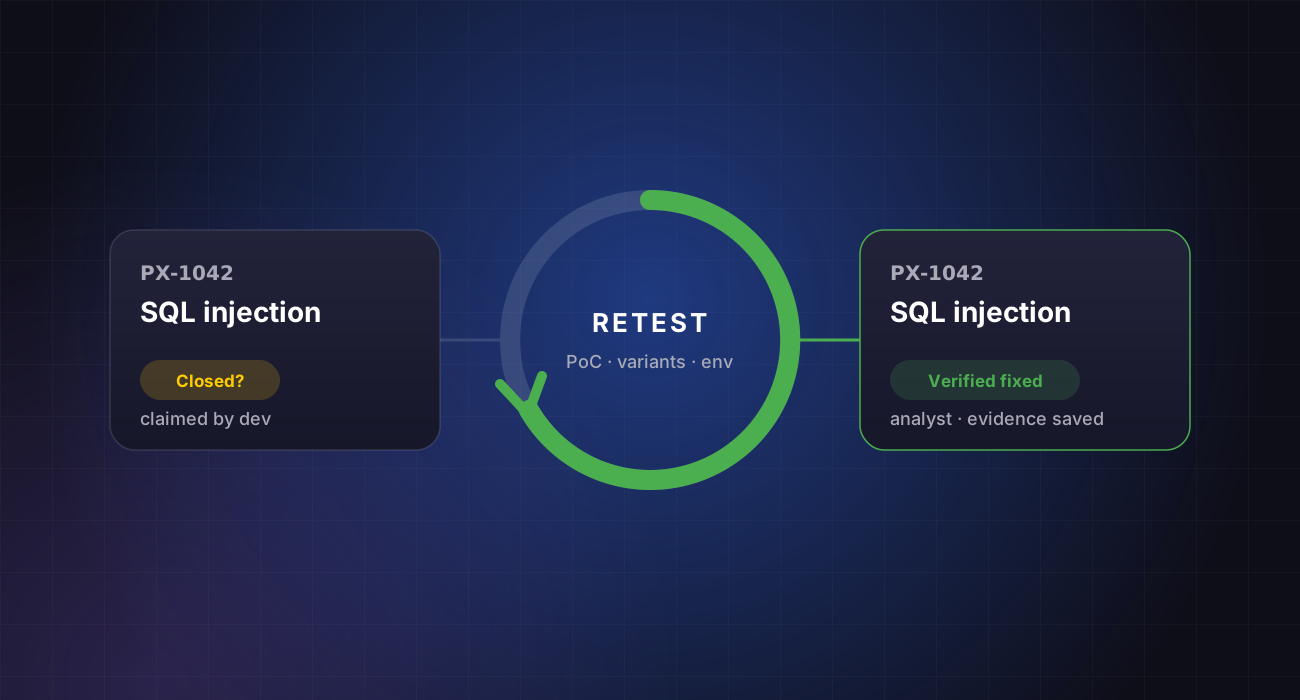
Every fix in PentestX triggers a scoped retest, so “resolved” always means verified, with evidence attached. See how retesting works →
Turn scores into a fix order
Fix first what is severe, likely and exposed. Schedule what is severe but unlikely or well contained. Batch the low-risk items into normal maintenance. Write down the reasoning so the order can be explained to leadership and auditors.
Read the whole finding
Scores summarise; the evidence, impact and remediation steps tell you what to do. Read them together, ask the tester when something is unclear, and retest when it is fixed.
PentestX rates every finding on severity and CVSS, shows the asset’s criticality and exposure alongside, and you can comment on any finding to ask the tester who found it.