- SOC 2 does not name penetration testing as a mandatory control, but auditors commonly expect it.
- A pentest is strong evidence for the monitoring and risk assessment criteria.
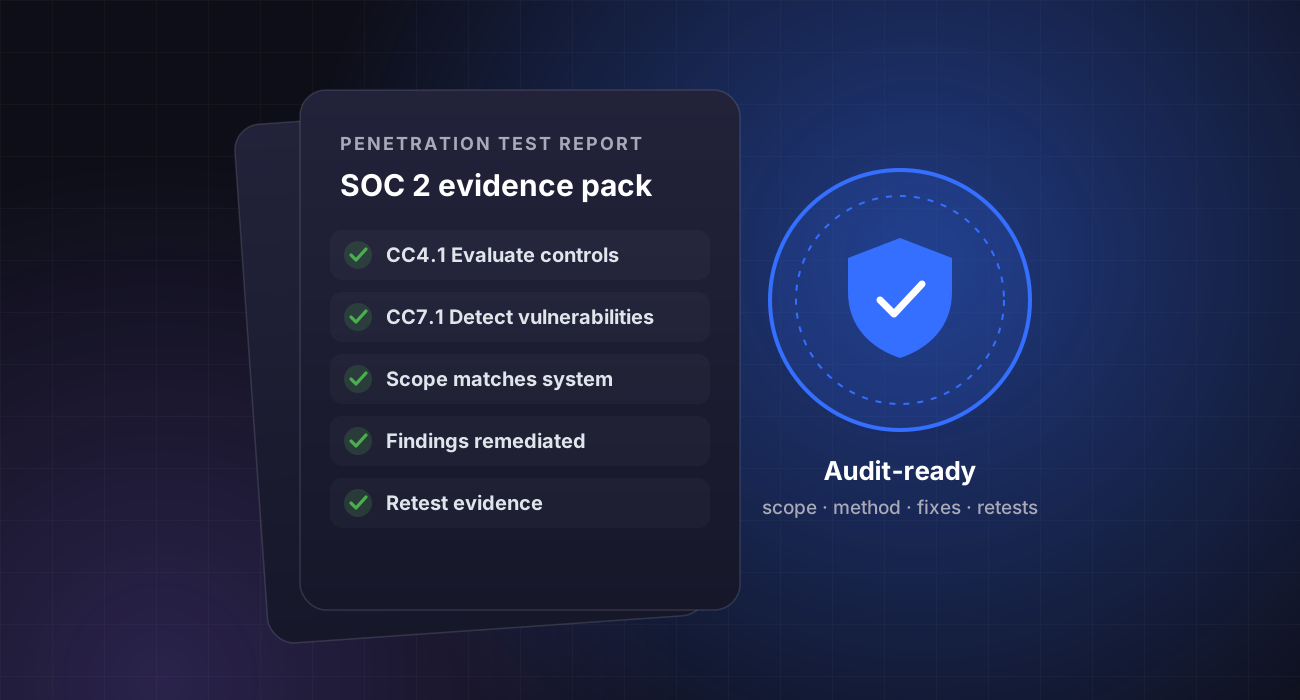
- Auditors look for scope, methodology, findings, remediation and retest evidence.
Ask ten companies whether SOC 2 requires a penetration test and you will get several answers. The short version: the criteria do not mandate one, yet most auditors expect to see one, and it is one of the clearest ways to evidence your controls.
Here is how a pentest fits into a SOC 2 audit, and what makes a report useful as evidence.
What the criteria actually say
The Trust Services Criteria ask you to identify and assess risks, monitor controls and evaluate whether they work, and detect and respond to vulnerabilities. They do not prescribe how. Penetration testing is one of the methods the criteria’s points of focus describe for evaluating controls, alongside vulnerability scanning and other assessments.
What auditors look for
Auditors generally want to see that testing happened during the audit period, covered the systems in scope for your report, was performed by a qualified independent party, and that findings were tracked to resolution. A list of open findings with no follow-up is weaker evidence than a smaller list that was fixed and retested.
 PentestX in practiceFIND-0214 · /api/orders
Every fix in PentestX triggers a scoped retest, so “resolved” always means verified, with evidence attached. See how retesting works →
Scope it to your system description
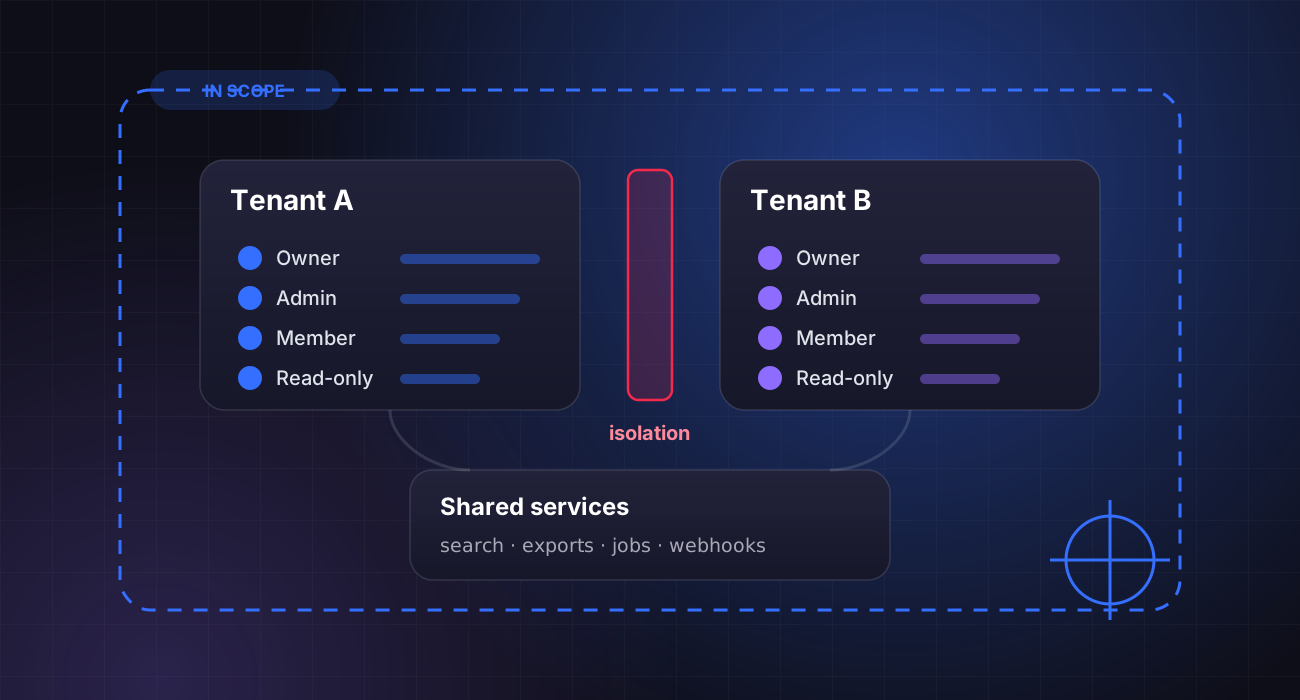
Match the pentest scope to the system described in your SOC 2 report: the production application, its APIs, the cloud environment it runs in and the network perimeter. Testing something outside that boundary may be useful, but it does not evidence your in-scope controls.
What a useful report contains
An executive summary, scope and methodology, each finding with severity, evidence and remediation guidance, and a record of retests. Mapping findings to recognised frameworks such as OWASP helps auditors understand coverage quickly.
Timing and cadence
Most teams test at least annually and after significant changes, timed so fixes and retests land before the end of the audit period. Confirm expectations with your auditor early, since firms differ.
PentestX reports include methodology, risk-rated findings, remediation guidance and retest history, mapped to the frameworks you report against, plus a security certificate you can share.